
Solar carport procurement
Solar Carports for Saudi Projects: Define the Structure and PV Scope
· Shades Systems
For a company campus, university or commercial parking project, the canopy proposal and solar-system proposal must be reviewed together. The structure supports a specified panel installation under an approved design; the solar specialist designs the electrical system, assesses generation and commissions its equipment. Defining the handover between suppliers helps an owner compare equivalent offers and avoids treating every parking shade as suitable for a later solar conversion.
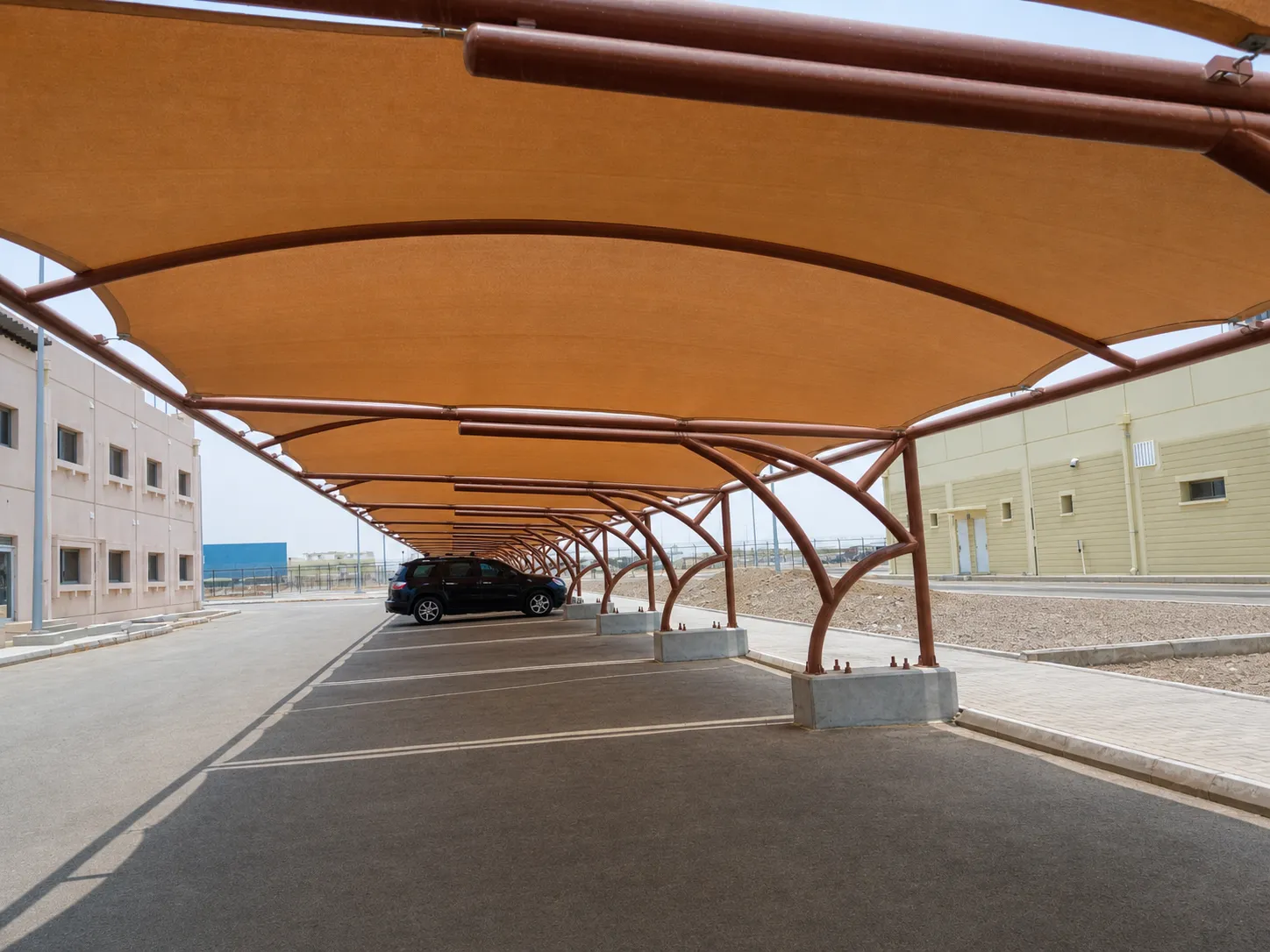
Name the product being purchased
A conventional shade canopy, a structure designed around a specified photovoltaic array and a complete solar project are different procurement scopes. Solar-ready alone does not identify the panels, mounting arrangement or connection responsibilities. Request a coordinated layout and a responsibility schedule showing what each supplier will deliver and which items still require design or approval.
Agree panel and mounting information early
The structural designer and solar specialist should exchange the selected module model, dimensions, weight, array layout and approved rail and attachment arrangement. A different module or attachment zone may require the connection details and design to be reviewed. Do not derive project loads or member sizes from a photograph or a generic panel weight per square metre.
Module manufacturers publish product-specific mounting requirements. The Canadian Solar manual listed below illustrates the documents to obtain; it does not select that brand for the project or establish universal compatibility. The responsible specialist should use the current instructions for the model actually being supplied.
Assess an existing canopy before proposing a retrofit
For an existing installation, start with the available drawings, condition information and foundation details. A qualified structural designer assesses whether the proposed modification is suitable, considering attachments, loads and site requirements. Removing a fabric cover does not automatically make its frame suitable for rigid modules. Assessment may lead to modification, replacement or rejection of the proposed arrangement.
Treat rain coverage as a separate requirement
Panels above vehicles do not by themselves establish a watertight roof. Agree the required coverage function, treatment of joints, drainage route and discharge point, together with the written responsibility for the assembled covering system. Coordinate vehicle movement, doors, pedestrian routes, support positions and electrical equipment on the same plan; panel layout should not be optimized independently of parking use.
| Interface | Responsibility to define |
|---|---|
| Modules and mounting | Selected model, mounting instructions and approved rail details |
| Structure and foundations | Design inputs, loads, drawings and acceptance responsibility |
| Electrical and commissioning | Equipment, tests and handover by the responsible specialist |
| Warranty and maintenance | Separate structure, equipment and performance terms; access plan |
Car parking shadesSteel shade structuresEV charging canopy coordination
Allocate electrical and commissioning responsibilities
The solar specialist defines the modules, inverters, cabling, protection, earthing, tests and any connection or approval requirements applicable to the project. Do not assume that a structural supplier includes these works or guarantees an energy output. Assign responsibility for cable routes, equipment supports and approval of any added attachments before fabrication.
US Department of Energy guidance treats site conditions, structures, equipment, installation and commissioning as connected considerations. It is a general coordination reference here, not a source of dimensions or legislation for a Saudi project. The project team establishes the applicable local requirements.
Compare offers against one responsibility schedule
Identify responsibility for surveys, structural design, foundations, surface protection, fabrication, erection and paving reinstatement. Review the solar equipment, electrical works, tests, handover information and maintenance scope separately. Each offer should identify exclusions, owner-supplied information and who accepts the shared design inputs.
Installed module nameplate capacity is not a guaranteed annual yield. The solar specialist should state the assumptions behind a production assessment, including site conditions, shading, cleaning and downtime. Separate structural warranties from equipment warranties and any performance commitments. A project-specific documented assessment is needed before relying on a payback period or financial return.
Design maintenance access into the brief
Agree how inspections, cleaning and equipment replacement will be performed, including working areas and any parking closures, with the qualified project team. Do not presume that panels can be walked on or that a structural element can carry additional equipment. Operators should receive supplier instructions and the approved maintenance plan; electrical work and isolation remain with the responsible qualified personnel.
Bring a defined project to the quotation stage
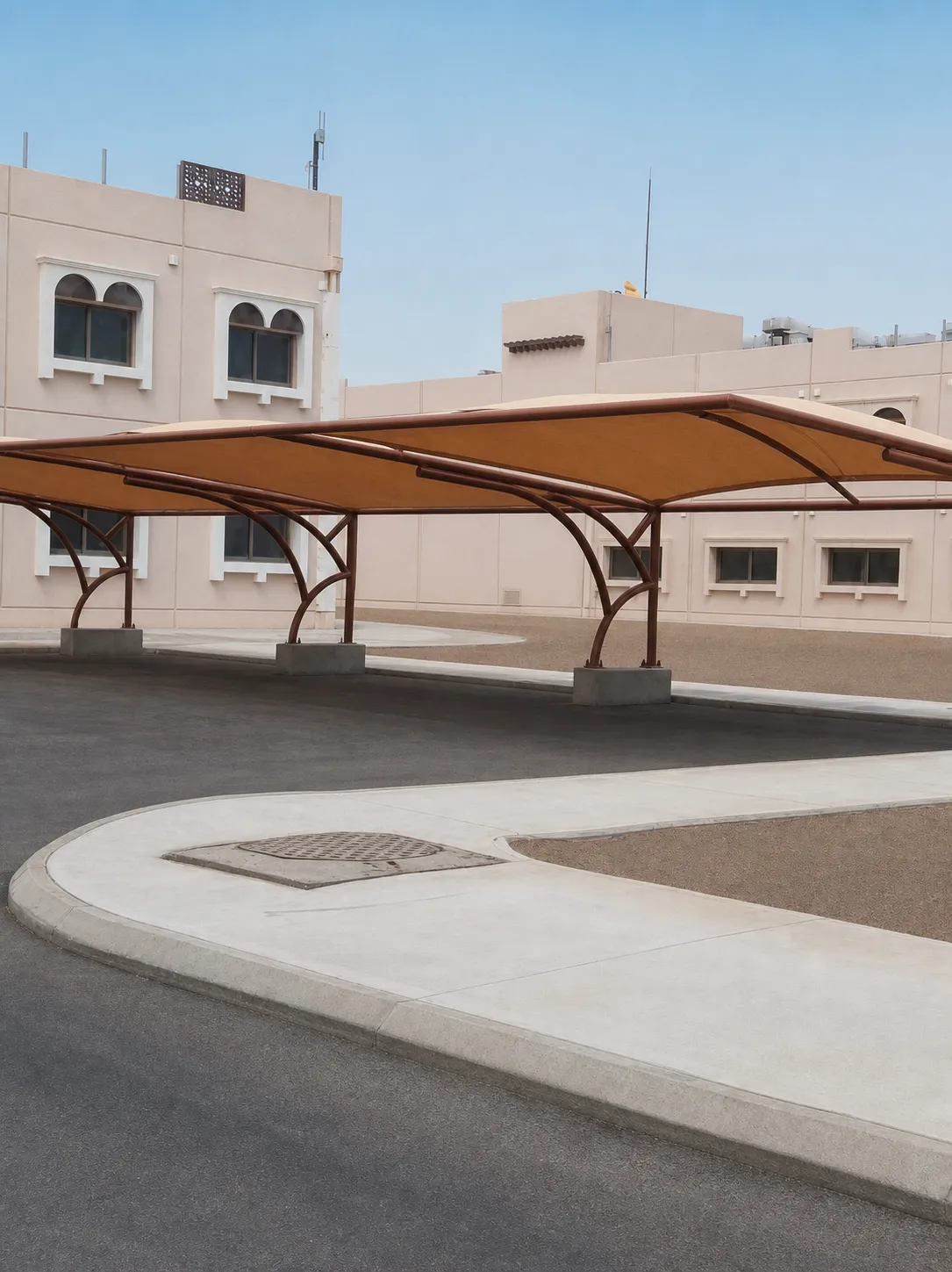
Provide the parking layout, site photographs, existing-structure information where relevant, coverage requirements and available module and electrical-contractor information. State whether the request covers the structure only, interface coordination or a wider package involving other parties. This supports a useful discussion of canopy fabrication and installation without promising compatibility, cost or delivery dates before the inputs are known.
Frequently asked questions
Can every existing canopy take solar panels?
No. A qualified designer must assess the structure, condition, foundations, attachments and specific proposal before any modification is accepted.
Does a canopy supplier guarantee energy generation?
Not automatically. The agreement must identify the structure and solar specialist scopes and any written performance commitment and conditions.
Are panels a rainproof carport roof?
Panels alone do not establish watertightness. Agree the joint treatment, drainage and covering-system responsibility.