Playground Shade Structures Saudi Arabia — Engineered Shade Solutions
Playground Shade Structures in Saudi Arabia: In Saudi Arabia, children's outdoor play areas present one of the most urgent shading needs in the built environment. Surface temperatures on exposed playground equipment — slides, climbing frames, rubber flooring — routinely reach 70–80°C in direct summer sun, creating a serious burn risk and making the equipment unusable for the majority of the day. Playground shade structures create a protected microclimate beneath the canopy, reducing surface temperatures by 25–35°C and extending usable outdoor hours dramatically. Shades Systems designs and installs playground shade structures for schools, parks, residential compounds, hotels and resorts across Saudi Arabia.
Service image gallery
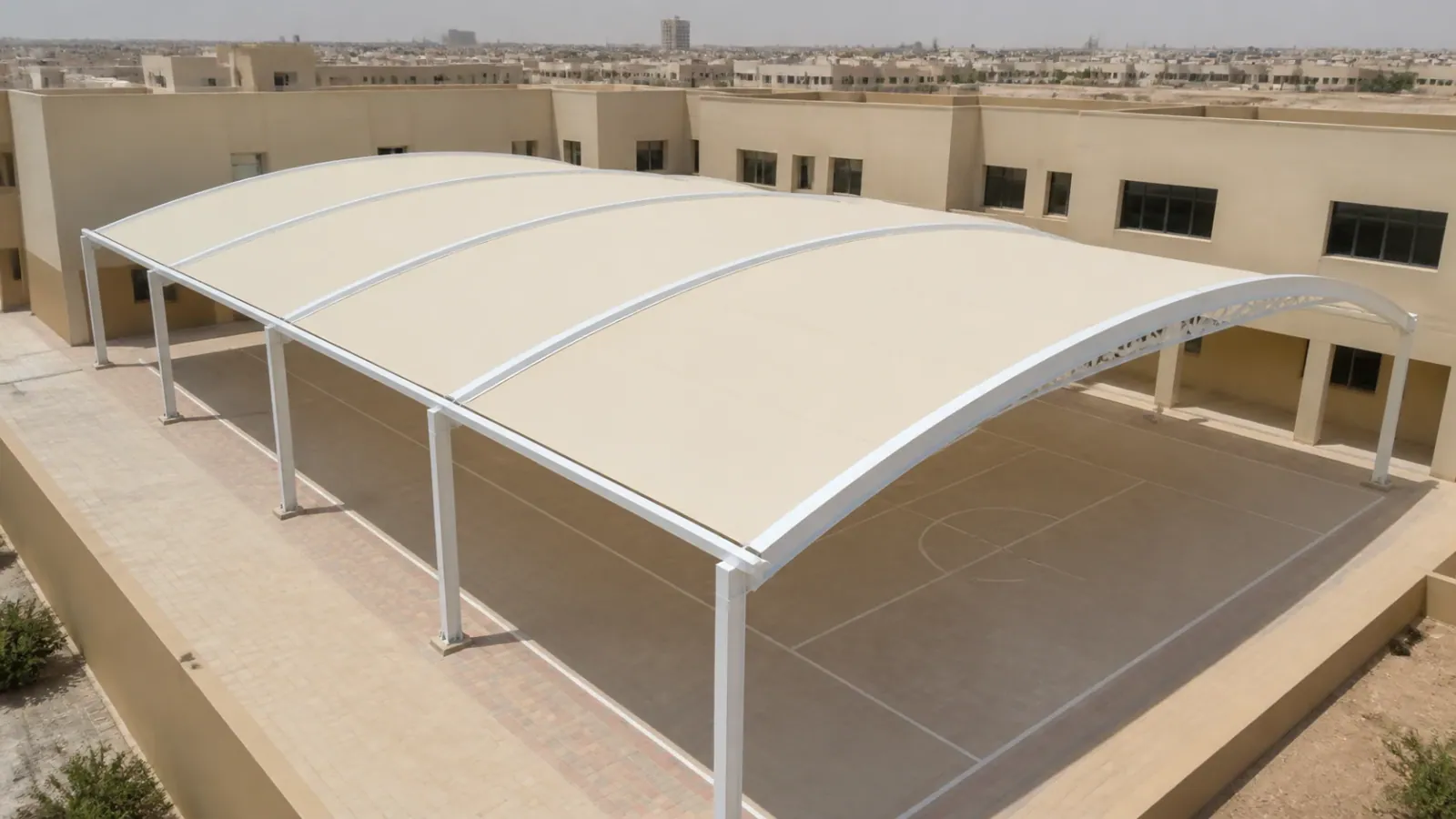


The choice of shade material for playgrounds is typically HDPE knitted shade cloth at a 90–95% shade factor — the maximum UV block available in this material category — supported on hot-dip galvanised steel or powder-coated aluminium frames. The high shade factor maximises thermal protection beneath the canopy, while the breathable open-weave structure of HDPE ensures that heat does not accumulate as it would beneath a solid membrane. For enclosed play area structures requiring full waterproofing — indoor-outdoor play zones in hotel kids' clubs or resort family centres — PVC-coated fabric or polycarbonate roofing is used instead.
Child safety is built into every dimension of our playground shade specifications. Column bases are set at safe setbacks from the play equipment boundary — typically 1.5 m minimum — so that a child cannot run into a column at the edge of a slide or climbing frame. All column lower sections are fitted with impact-resistant foam protective pads at child head height. Steel sections used within the play zone boundary are fully deburred and powder-coated in child-safe colours, with no sharp protrusions at any accessible point. Foundation bolts and base plates are recessed or capped. These design practices are consistent with children's facility safety standards and are reviewed for each project.
The structural forms available for playground shade structures include: flat canopy (simple, economical, suits rectangular play areas), pyramid and multi-peak (cone forms that add visual interest and create higher clearance at the centre of the play area), wave or hyperbolic form (creates dramatic visual character using HDPE sail cloth under tension), and overlapping sail compositions (multiple triangular or rectangular sails layered to cover irregular play area shapes). The form choice is driven by the play area geometry, the age range of children using the equipment, and the aesthetic brief — a premium residential compound or hotel play area typically warrants a more sculptural form than a standard school yard.
Bright, child-friendly colours are central to a successful playground shade specification. HDPE shade cloth is available in a wide range of vivid colours — primary red, royal blue, leaf green, orange, yellow — as well as more naturalistic tones for projects where the landscape character is the design priority. Multi-coloured compositions using two or three sail colours are popular in school and park playgrounds. The colour of the shade cloth also affects the light quality beneath the canopy — warm-toned fabrics such as orange and yellow cast a warm light, while cooler tones create a more neutral environment. We guide clients through the colour selection process during the design phase.