Mosque Shade Structures Saudi Arabia — Engineered Shade Solutions
Mosque Shade Structures in Saudi Arabia: Mosque shade structures require the highest standard of design sensitivity, material quality and construction craftsmanship — they serve Saudi Arabia's most important community spaces and must perform flawlessly for decades. Outdoor prayer areas (musallas), mosque courtyards (sahat al-masjid), ablution areas (mida'a) and women's prayer sections all require shade that protects worshippers from Saudi Arabia's extreme heat while harmonising with the mosque's architectural character. Shades Systems brings technical rigour and deep respect for Islamic architectural tradition to every mosque shade project.
Service image gallery
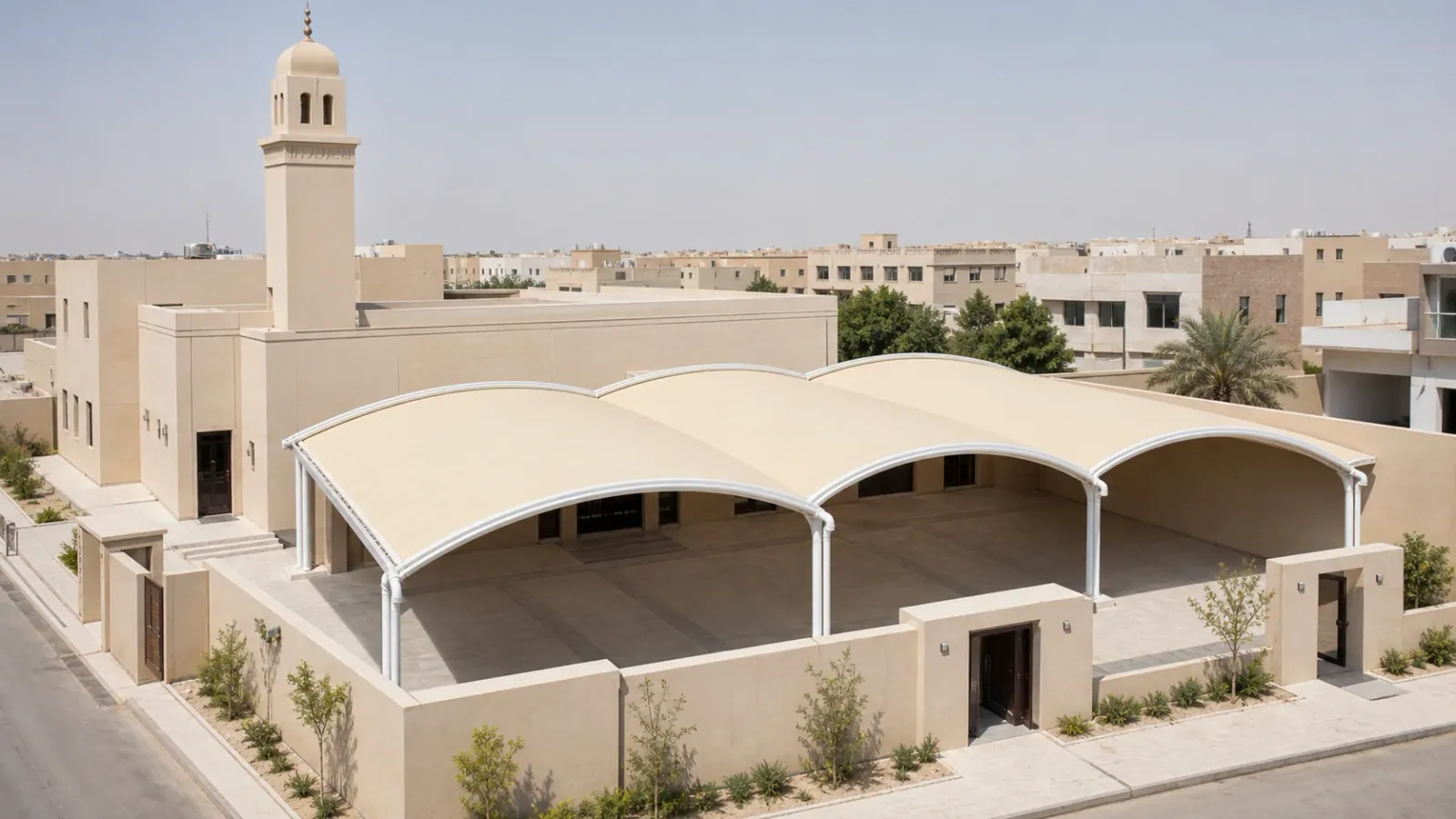


The outdoor spaces of Saudi Arabia's mosques vary enormously in scale — from small neighbourhood mosques with courtyards of 100–300 m², to major Friday mosques and complexes with open prayer terraces of 2,000–10,000 m². The shading solution must be matched to the scale, function and architectural character of each space. For prestige mosque courtyards in major cities, tensile PVC/PVDF membrane structures can provide waterproof coverage and flowing architectural form. Selected PVDF grades use low-soiling topcoats; warranty, fire classification and maintenance requirements are confirmed from the proposed product documents and project approvals. PTFE glass-fibre membrane is also available on request for specialist projects.
For mosque projects where the existing architecture uses strong geometric and ornamental language, laser-cut aluminium panels in traditional arabesque and mashrabiya patterns provide shade while functioning as architectural screens in their own right — combining UV protection, privacy and decorative Islamic identity in a single element. These panels are CNC-cut to precise pattern files, powder-coated in white, cream or gold tones, and fixed to aluminium sub-frames that can be designed to align with existing arcade columns, parapet heights and massing of the mosque structure. The result is shade that does not look added-on but rather integral to the architecture.
PVC/PVDF coated fabric membranes over galvanised or aluminium frames are used for mosque courtyards where a cost-effective permanent canopy is required. White and off-white fabric tones are standard for mosque applications — they reflect maximum solar radiation, maintaining cooler temperatures beneath, and they convey the purity and light associated with places of worship. Polycarbonate roofing is used for ablution areas and covered walkways where natural daylighting is essential — its translucency keeps these spaces bright while providing rain and UV protection. HDPE shade cloth is used for Ramadan and Hajj season overflow areas where speed of installation and cost are primary considerations.
Our mosque shade designs are developed with full sensitivity to Waqf (Awqaf) authority requirements that govern mosque infrastructure in Saudi Arabia. All designs are prepared with documentation required for Awqaf submission: engineering calculations stamped by a Saudi-licensed structural engineer, site layout plans, elevation drawings showing how the shade integrates with the mosque architecture, and material specifications confirming quality and durability standards. We manage the full permit process including Awqaf submission, municipality approvals and structural inspection coordination, removing this administrative burden from mosque committees and religious affairs offices.